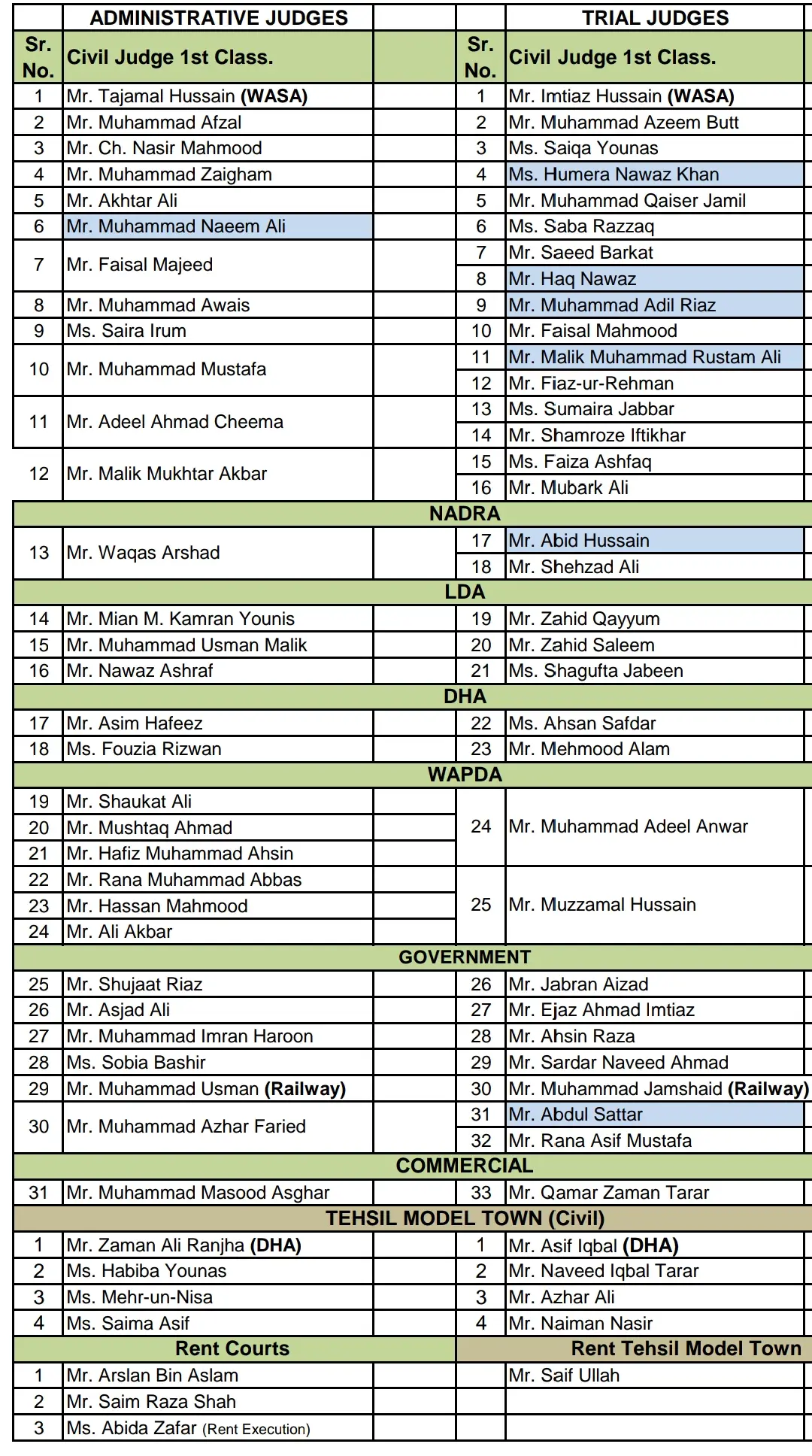
The Admin and Trial Courts Lahore system plays an important role in the smooth administration of civil justice in Lahore. Many people who file civil suits are unfamiliar with how their cases move through the courts. One common question is why a case is heard in one court at the beginning and then transferred to another court later. This happens because the Lahore Civil Courts have divided civil proceedings between Administrative Courts and Trial Courts. Each court has separate responsibilities that help ensure civil cases are processed efficiently and according to law.
This article explains the functions of Admin and Trial Courts Lahore, the duties of Admin And Trial Courts judges Lahore Civil Court, and how a civil case proceeds from filing to final judgment.
The Admin and Trial Courts Lahore system is an administrative arrangement adopted by the Lahore Civil Courts to improve case management. Every newly filed civil suit first comes before an Administrative Court. After completing the preliminary legal formalities, the case is transferred to a Trial Court, where evidence is recorded and the final decision is made.
This division allows Administrative Courts to focus on procedural matters while Trial Courts concentrate on deciding cases on their merits.
The purpose of the Admin and Trial Courts Lahore system is to reduce delays and distribute judicial work efficiently. Instead of one judge performing every task from the filing of the suit until judgment, different courts handle different stages of the proceedings.
This system offers several benefits, including:
Faster registration and scrutiny of civil suits.
Proper service of notices to defendants.
Timely framing of legal issues.
Better workload management among judges.
More time for Trial Courts to hear evidence and decide cases.
Because of this arrangement, civil litigation becomes more organized and efficient.
Administrative Courts perform the initial judicial work after a civil suit is filed. Although these courts do not usually decide the final outcome of the dispute, they play a vital role in preparing the case for trial.
The responsibilities of an Administrative Court include:
Receiving newly instituted civil suits.
Examining court documents and pleadings.
Issuing notices and summons to defendants.
Ensuring proper service upon all parties.
Hearing preliminary applications.
Allowing parties to file written statements.
Framing the issues that require determination during trial.
Completing all procedural requirements before transferring the case.
Only after these legal formalities are completed does the Administrative Court transfer the file to the concerned Trial Court.
Understanding the movement of a civil case helps litigants know what to expect throughout the proceedings.
A typical civil suit follows these stages:
Filing of the plaint in Lahore Civil Courts.
Assignment of the case to an Administrative Court.
Issuance of notices to the defendants.
Filing of written statements and replies.
Framing of issues by the Administrative Court.
Transfer of the case to the Trial Court.
Recording of plaintiff’s evidence.
Recording of defendant’s evidence.
Final arguments by both parties.
Pronouncement of judgment by the Trial Court.
Every stage has its own legal importance, and the transfer from the Administrative Court to the Trial Court is a routine part of the process.
Once the case reaches the Trial Court, the actual trial begins. The Trial Court is responsible for examining the evidence presented by both parties and deciding the dispute according to law.
The Trial Court performs the following functions:
Recording statements of witnesses.
Accepting documentary evidence.
Conducting cross-examination.
Deciding objections relating to evidence.
Hearing final arguments.
Evaluating the complete record.
Passing the final judgment and decree.
The Trial Court determines the rights and liabilities of the parties based on the evidence produced before it.
The Admin And Trial Courts judges Lahore Civil Court have different responsibilities but work together to ensure the effective administration of justice.
Administrative Court judges supervise the early stages of litigation. They ensure that notices are issued correctly, pleadings are complete, and legal issues are properly framed before trial.
Trial Court judges hear witnesses, evaluate documentary evidence, decide legal objections, hear final arguments, and ultimately pronounce the judgment. Their decisions are based entirely on the evidence and applicable laws.
Both Administrative Court judges and Trial Court judges contribute significantly to maintaining fairness, transparency, and judicial efficiency in Lahore Civil Courts.
Many litigants become concerned when they learn that their case has been transferred from one court to another. However, this transfer is a normal part of the Admin and Trial Courts Lahore system.
The Administrative Court completes all preliminary legal formalities before sending the case to the Trial Court. The transfer does not affect the merits of the case or the rights of either party. Instead, it allows the Trial Court to devote its full attention to recording evidence and deciding the dispute.
The division between Administrative Courts and Trial Courts offers several important advantages:
Better management of civil litigation.
Reduced procedural delays.
Faster disposal of preliminary matters.
Improved scheduling of evidence.
Efficient use of judicial resources.
Greater consistency in court procedures.
Better service to litigants and lawyers.
These advantages help improve the overall functioning of Lahore Civil Courts.
Anyone involved in civil litigation should understand the role of Admin and Trial Courts Lahore. Knowing why a case is transferred from an Administrative Court to a Trial Court prevents unnecessary confusion and helps parties prepare for each stage of the proceedings.
Lawyers can also plan their litigation strategy more effectively by understanding when pleadings, evidence, and legal arguments will be presented.
The Admin and Trial Courts Lahore system has become an important feature of the Lahore Civil Courts. Every civil suit first appears before an Administrative Court, where notices are issued, pleadings are completed, and issues are framed. After these procedural requirements have been fulfilled, the case is transferred to the Trial Court for recording evidence, hearing arguments, and delivering the final judgment.
The Admin And Trial Courts judges Lahore Civil Court perform separate but equally essential duties. Administrative Court judges manage the preliminary stages of litigation, while Trial Court judges decide the case on its merits. This structured system promotes efficiency, transparency, and the fair administration of justice, making it an essential part of civil litigation in Lahore.
Admin and Trial Courts Lahore are two categories of civil courts where Administrative Courts handle preliminary proceedings and Trial Courts hear evidence and decide the case.
A civil case is transferred after notices have been served, written statements have been filed, and issues have been framed by the Administrative Court.
Administrative Court judges deal with procedural matters, while Trial Court judges record evidence, hear arguments, and pronounce the final judgment.
Generally, Administrative Courts complete preliminary legal proceedings. The final decision is usually made by the Trial Court after hearing evidence.
The transfer is a routine part of the Admin and Trial Courts Lahore system and allows the Trial Court to conduct the trial and decide the case efficiently.