Biometric Verification For Case Filing – Complete Guide to Tracking Number Generation
Online Biometric Verification For Case Filing
Biometric Verification for Case Filing has become a mandatory and revolutionary step in Pakistan’s judicial system. Courts across the country now require biometric verification to ensure transparency, prevent impersonation, and eliminate fraudulent litigation. Whether you are filing a case in a civil court, session court, or high court, biometric verification is a compulsory process before your case is registered.
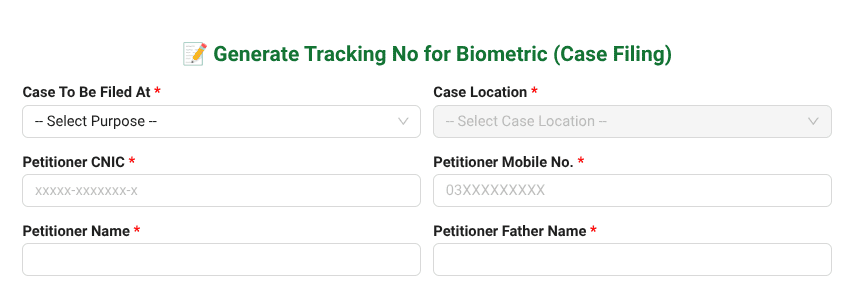
This system is closely linked with NADRA biometric verification, ensuring that the identity of the litigant, plaintiff, defendant, or attorney is verified through official biometric records. Once verification is complete, the system allows the user to Generate Tracking No for Biometric Case Filing, which is essential for further legal proceedings.
What is Biometric for Case Filing?
Biometric for Case Filing refers to the process of verifying an individual’s identity using fingerprints or thumb impressions through NADRA’s biometric database before a legal case is filed in court.
This verification ensures:
The applicant is a real and verified citizen
No fake or proxy litigation is filed
Legal documents are linked with verified CNIC records
After successful verification, the system enables the applicant to Generate Tracking No for Case Filing, which serves as proof that biometric requirements have been fulfilled.
Why Biometric Verification is Mandatory for Case Filing
The judiciary introduced biometric verification to strengthen the justice system. Some major reasons include:
Elimination of fake litigants
Prevention of identity fraud
Reduction in bogus and repetitive cases
Digital record linkage with NADRA
Faster and more transparent case filing process
Without completing biometric verification, courts will not allow a case to proceed. This applies to civil court biometric for case filing, session court biometric for case filling, and high court biometric for case filling.
Generate Tracking No for Biometric Case Filing – Why It Matters
When biometric verification is completed, the system automatically issues a tracking number. This number is extremely important because:
It confirms successful biometric verification
It is required during case filing in court
It helps court staff retrieve biometric records
It is used for future reference and follow-ups
Without this number, your biometric process is considered incomplete.
Generate Tracking No for Biometric Case Filing acts as:
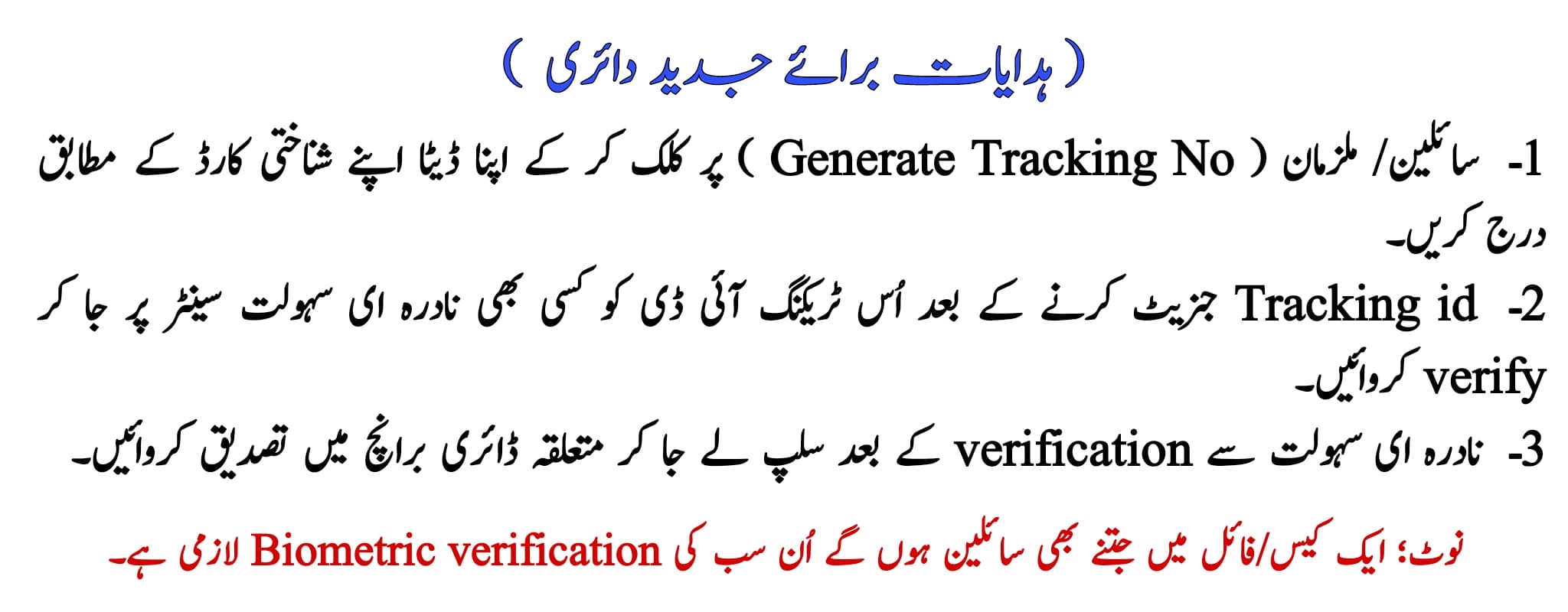
Generate Tracking No for Case Filing – Step-by-Step Process
Here is a general step-by-step explanation of how to Generate Tracking No for Case Filing:
Step 1: Visit Authorized Biometric Center
Go to:
NADRA Registration Center
Judicial Biometric Verification Desk
Authorized court biometric facility
Step 2: Provide CNIC and Personal Details
You will be required to submit:
Step 3: Biometric Verification
Your fingerprints/thumb impressions are scanned and verified through NADRA biometric for case filling.
Step 4: System Verification
The system matches your biometrics with NADRA’s database.
Step 5: Generate Tracking No for Biometric
Once verification is successful, the system generates a tracking number, which is printed or sent via SMS.
This tracking number must be attached with your case documents.
Civil Court Biometric for Case Filing
Civil court biometric for case filing is mandatory for:
Both plaintiffs and defendants may be required to complete biometric verification. Lawyers may also need verification depending on court rules.
Without completing biometric verification and failing to Generate Tracking No for Case Filing, the civil court may refuse to register the case.
Session Court Biometric for Case Filling
Session court biometric for case filling applies to:
Criminal cases
Bail applications
FIR-related proceedings
Trial cases
In criminal matters, biometric verification ensures that:
The accused is correctly identified
No fake bail applications are filed
Legal identity is authenticated
The session court requires the biometric tracking number at the time of filing. Failure to Generate Tracking No for Biometric Case Filing may result in objections or rejection.
High Court Biometric for Case Filling
High court biometric for case filling is mandatory for:
Constitutional petitions
Civil revisions
Criminal revisions
Writ petitions
High Courts strictly enforce biometric compliance. Petitions without biometric verification are often returned with objections.
Before filing any petition, applicants must complete NADRA biometric verification and Generate Tracking No for Case Filing.
NADRA Biometric for Case Filling – Central Role
NADRA biometric for case filling is the backbone of this entire system. NADRA maintains Pakistan’s official biometric database, ensuring accuracy and authenticity.
NADRA biometric verification ensures:
Courts rely on NADRA’s system to approve or reject biometric submissions. Without NADRA verification, it is impossible to Generate Tracking No for Biometric.
Common Problems in Biometric Verification
Some applicants face issues during biometric verification, such as:
In such cases, NADRA may:
Only after resolution can the applicant Generate Tracking No for Biometric Case Filing.
Legal Importance of Tracking Number
The tracking number:
Is attached with the plaint or petition
Is checked by court staff
Becomes part of the judicial record
Is used in future hearings
Courts may not entertain cases without a valid tracking number, making it a critical requirement for Biometric Verification For Case Filing.
Future of Biometric Case Filing in Pakistan
The biometric system is expected to:
Become fully online
Integrate with e-filing portals
Reduce human intervention
Speed up justice delivery
Soon, litigants may be able to Generate Tracking No for Case Filing through online portals linked with NADRA.
Conclusion
Biometric Verification For Case Filing is no longer optional—it is a mandatory legal requirement in Pakistan’s judicial system. Whether you are filing a case in a civil court, session court, or high court, biometric verification and the ability to Generate Tracking No for Biometric Case Filing is essential.
By linking courts with NADRA biometric for case filling, the judiciary has taken a strong step toward transparency, security, and efficiency. Every litigant must understand this process to avoid delays, objections, or rejection of cases.
Completing biometric verification on time and securing your tracking number ensures a smooth and legally compliant case filing experience.