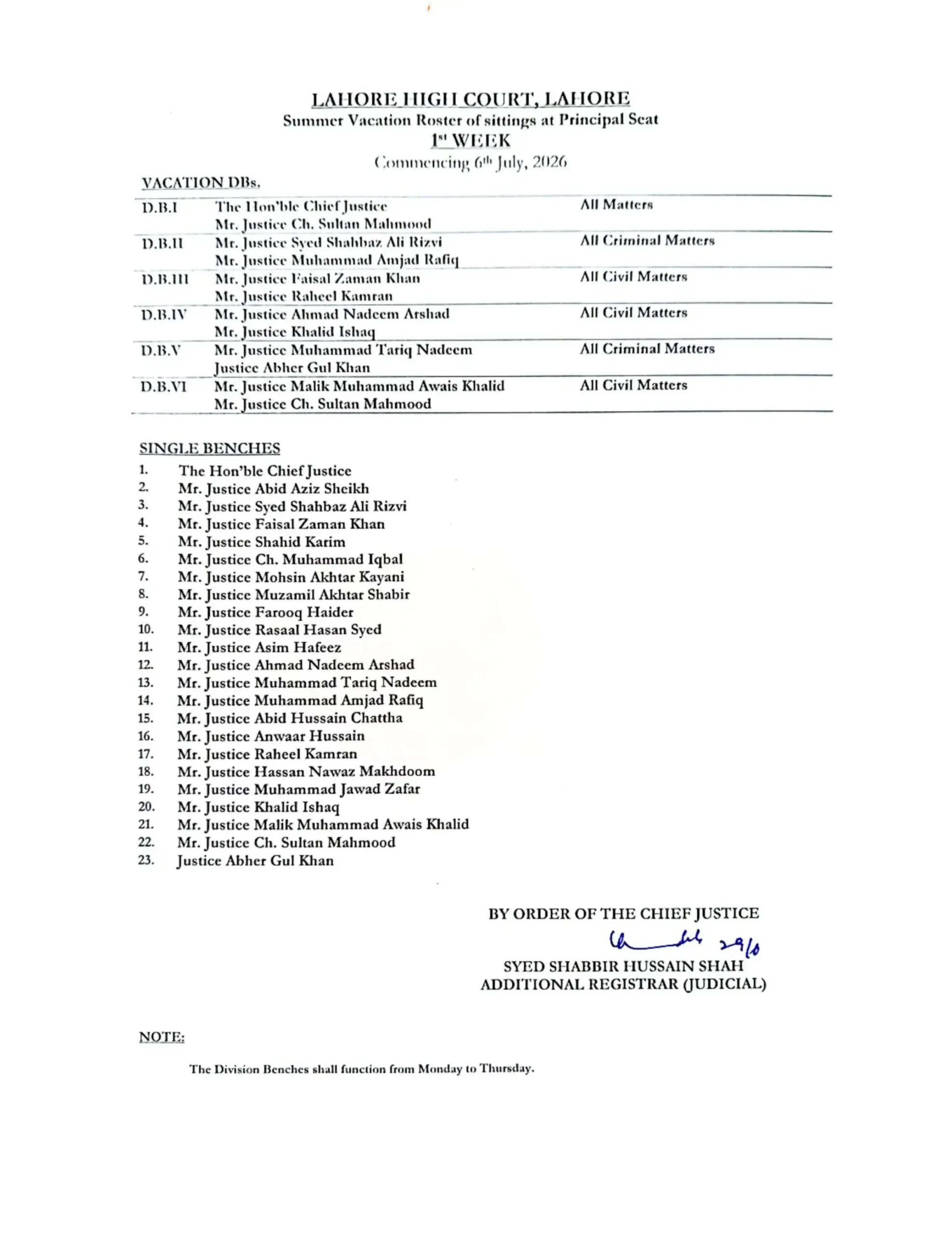
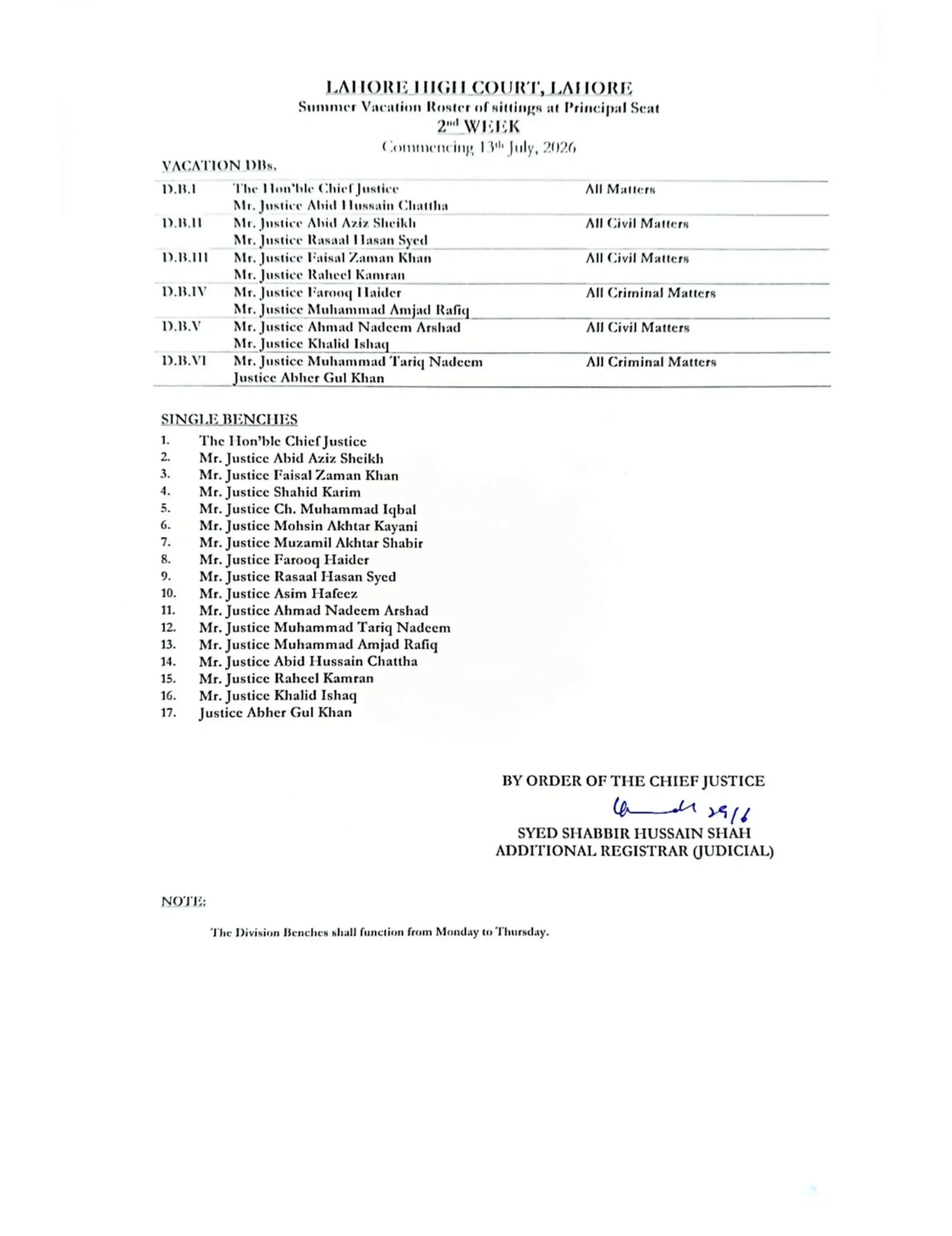
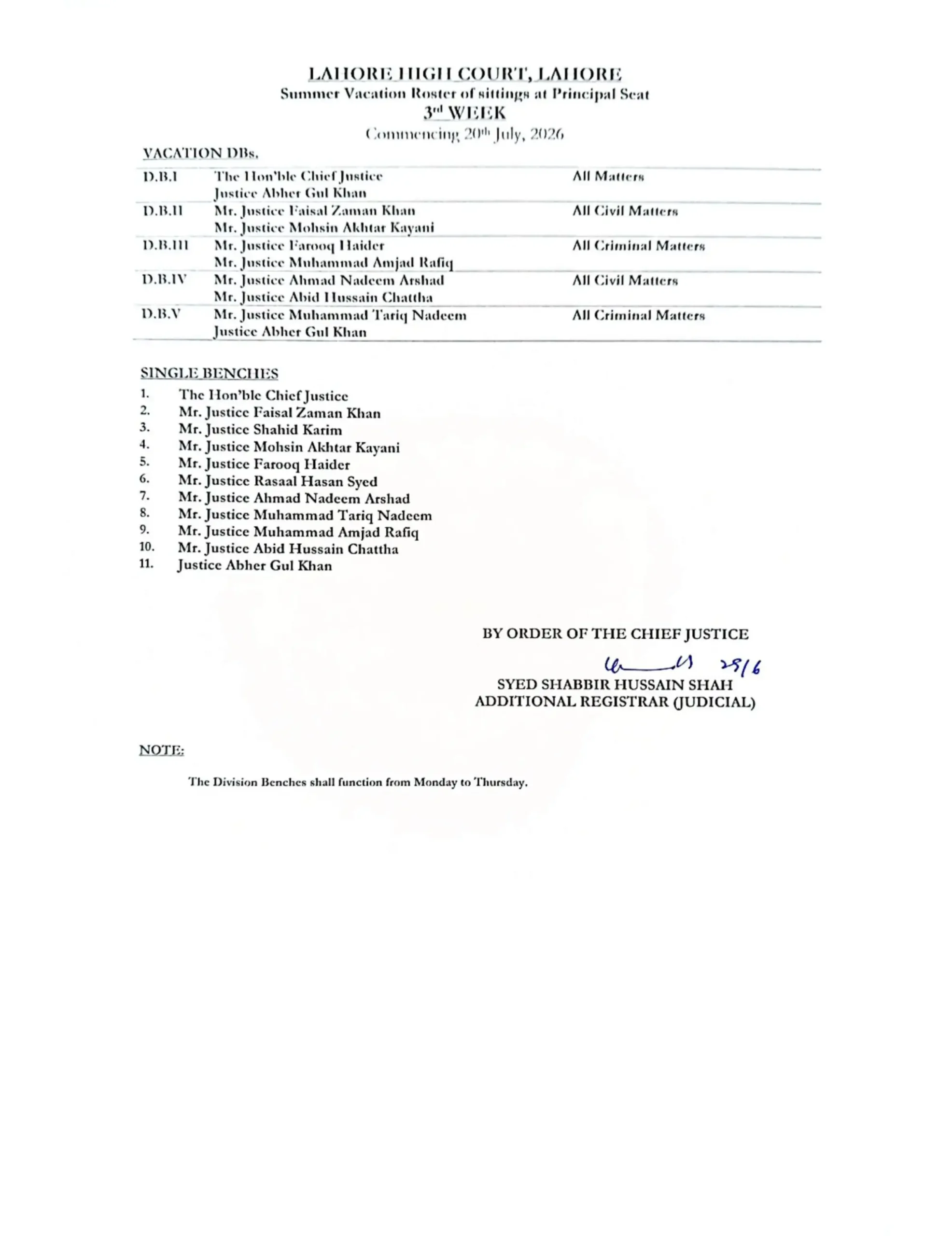
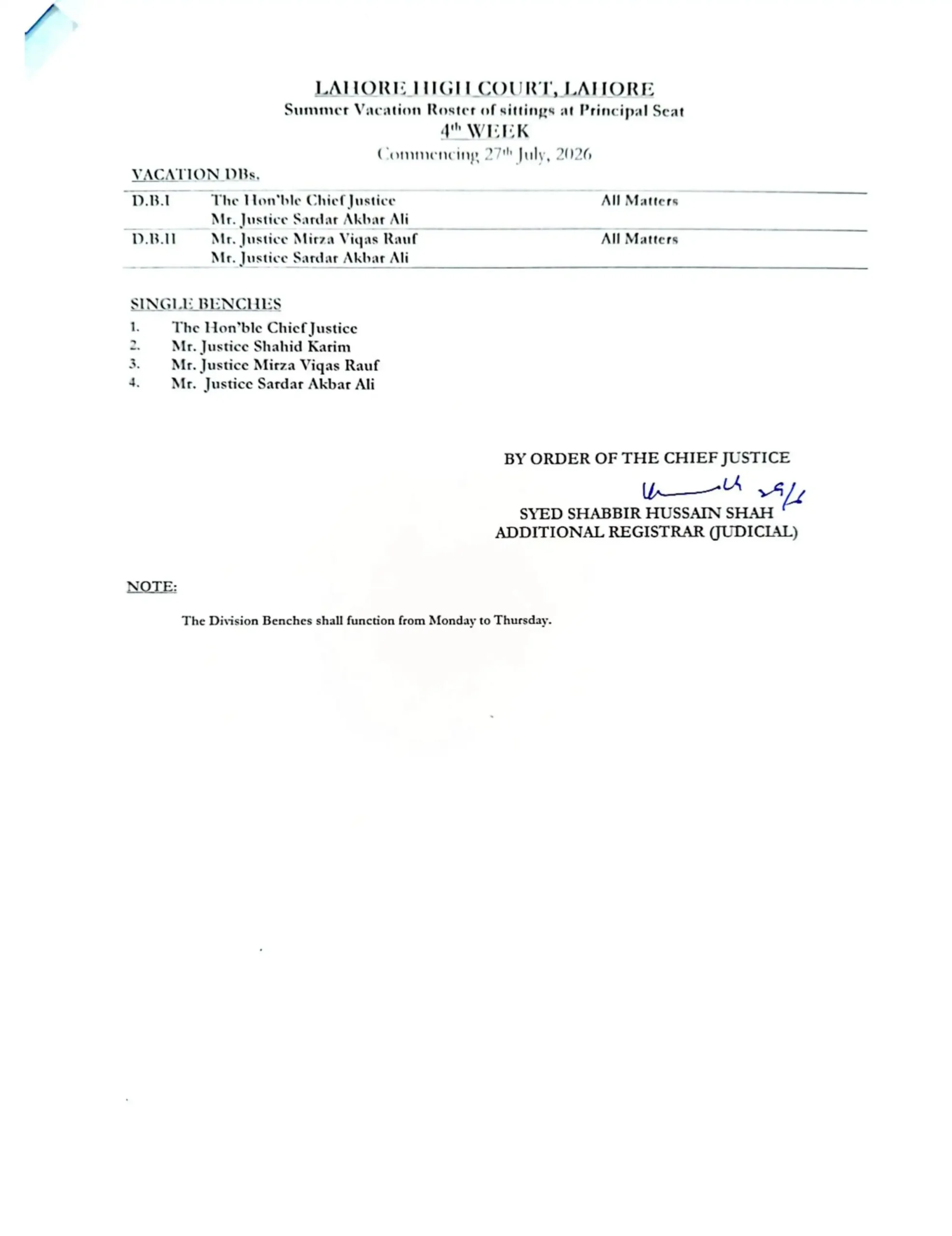
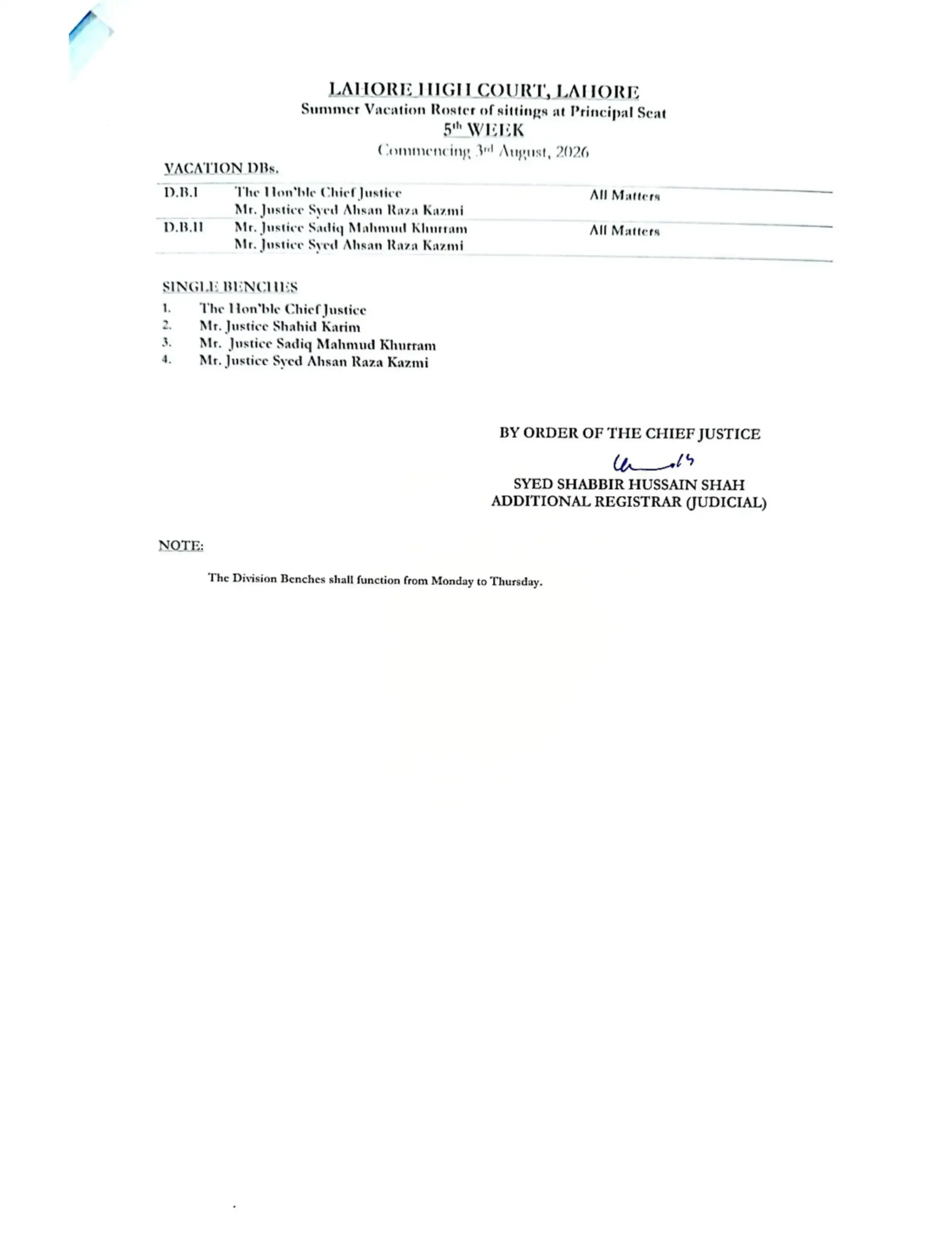
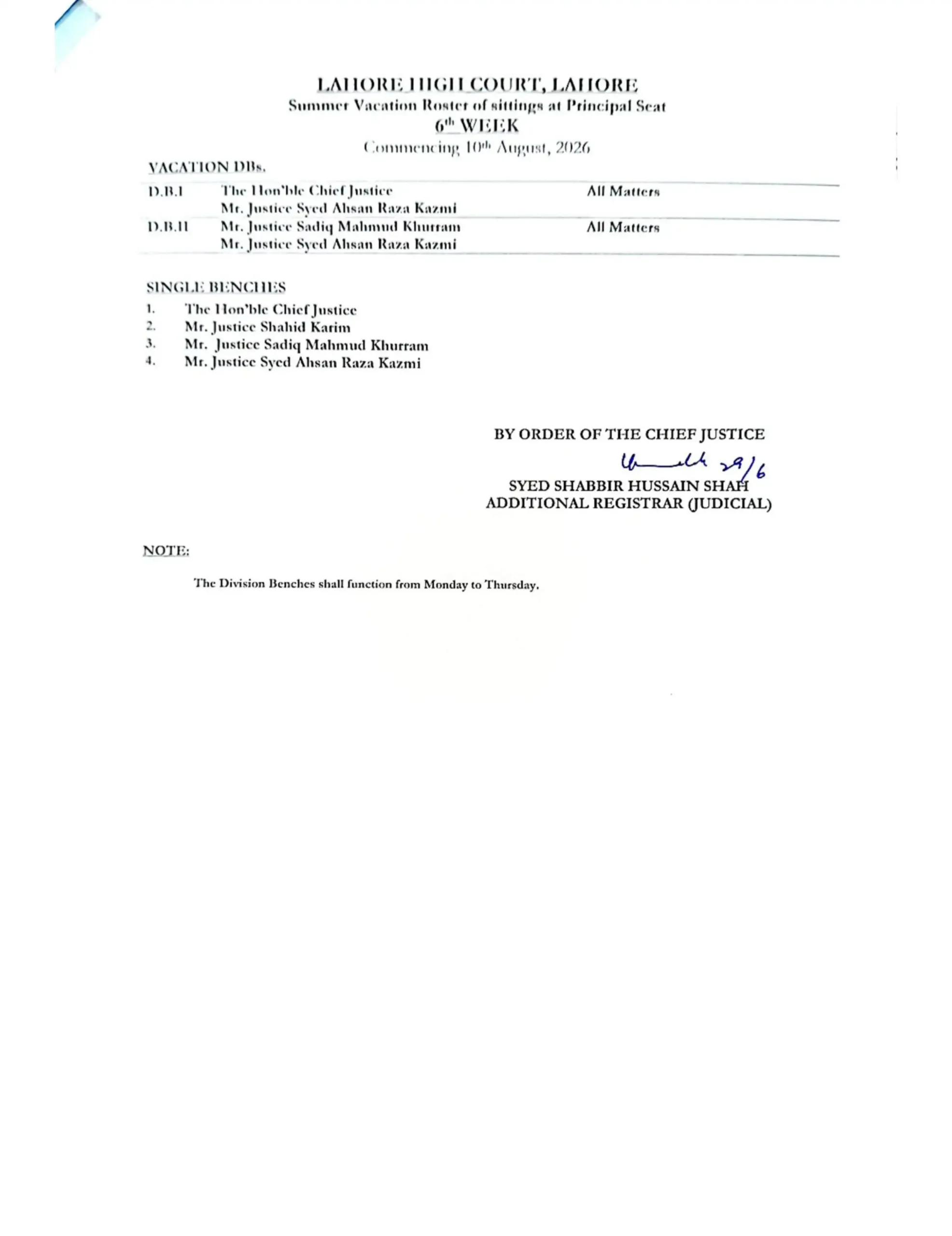
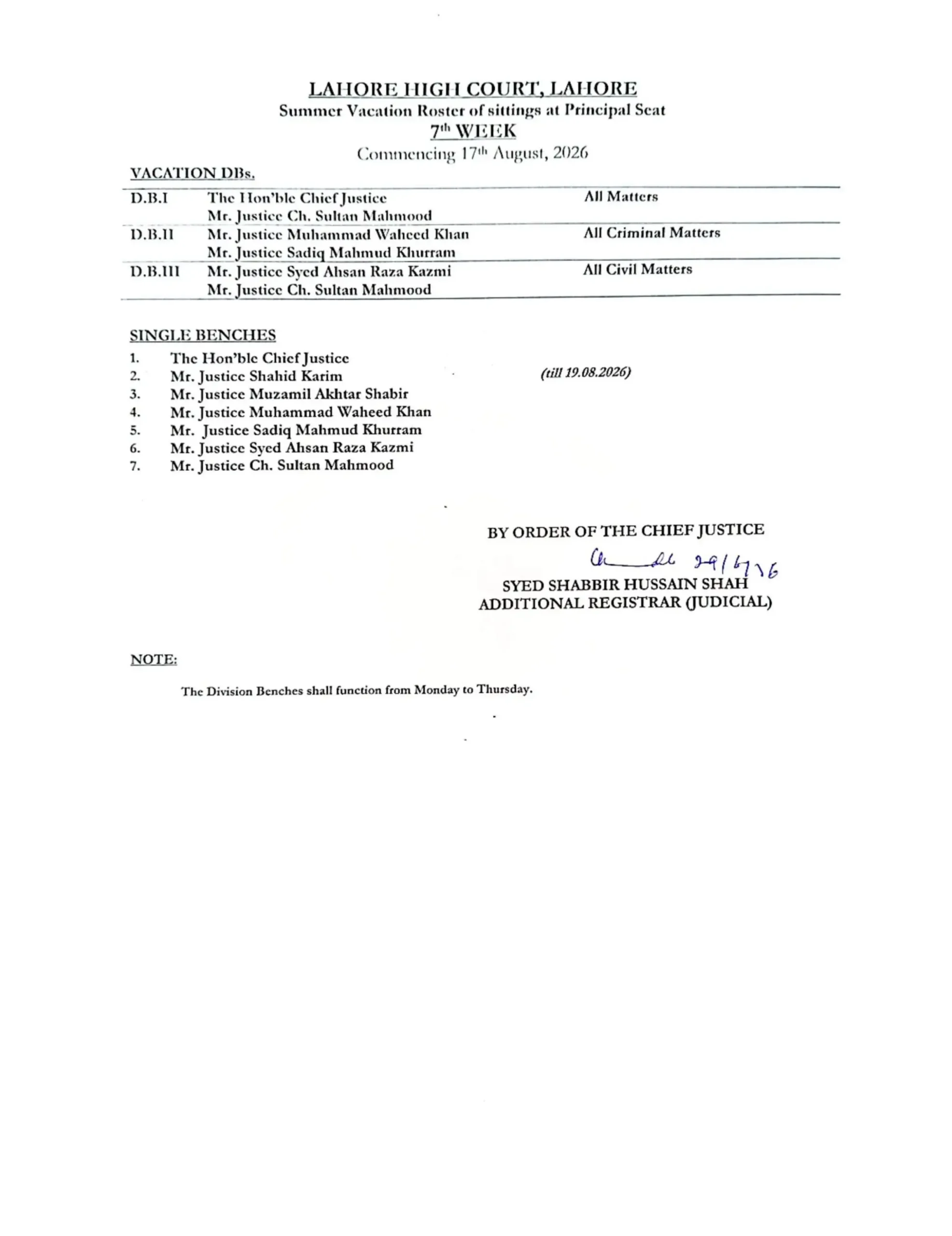
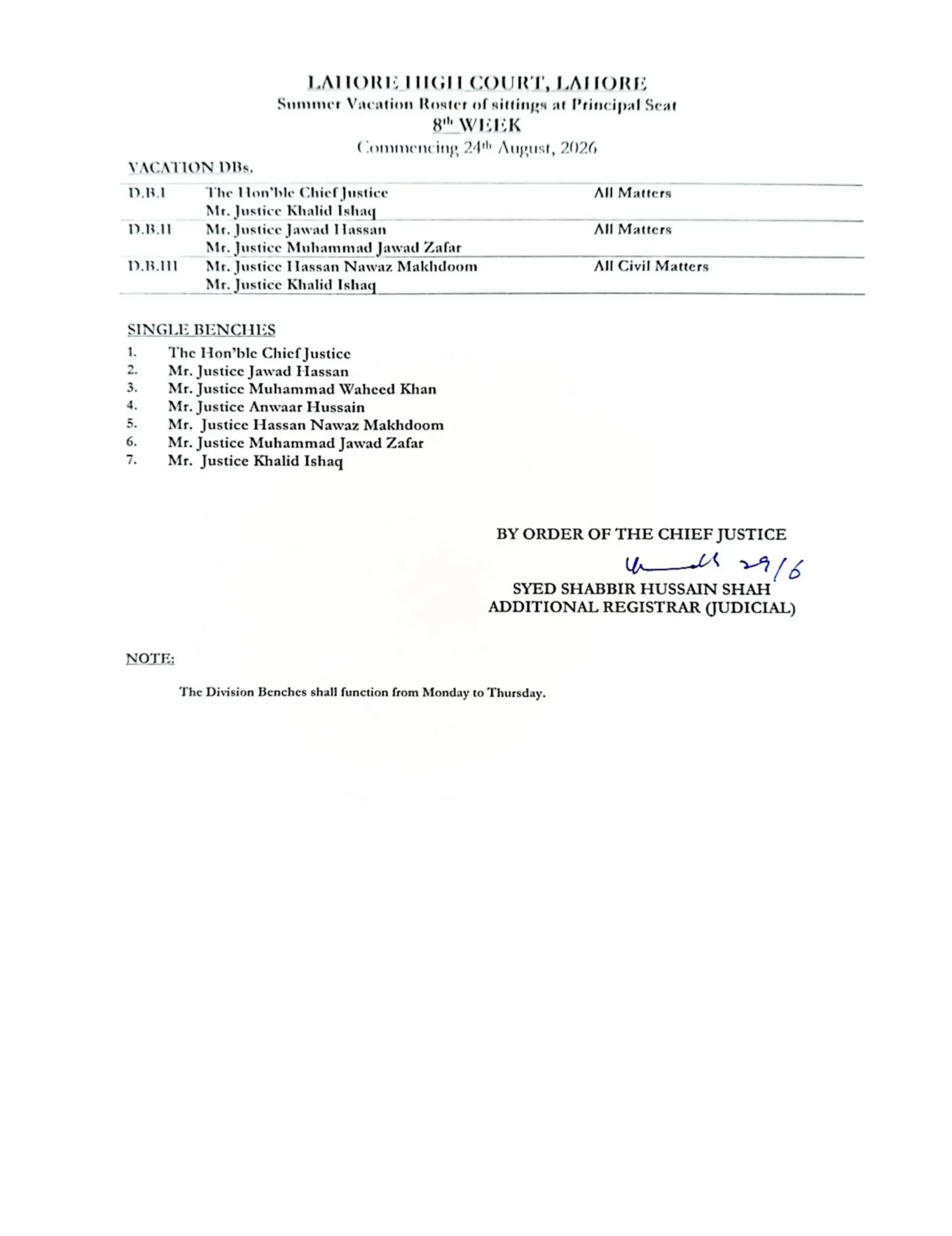
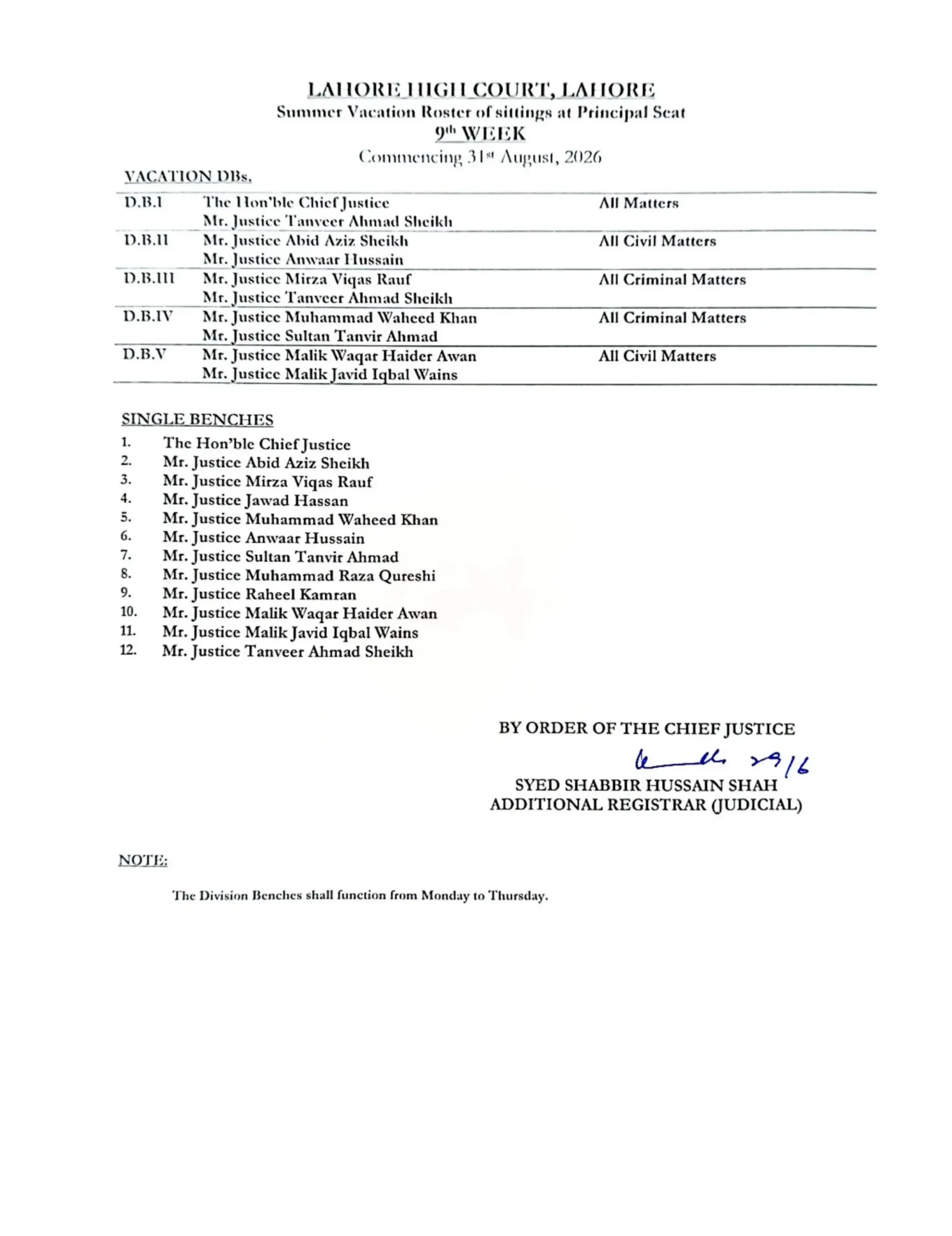
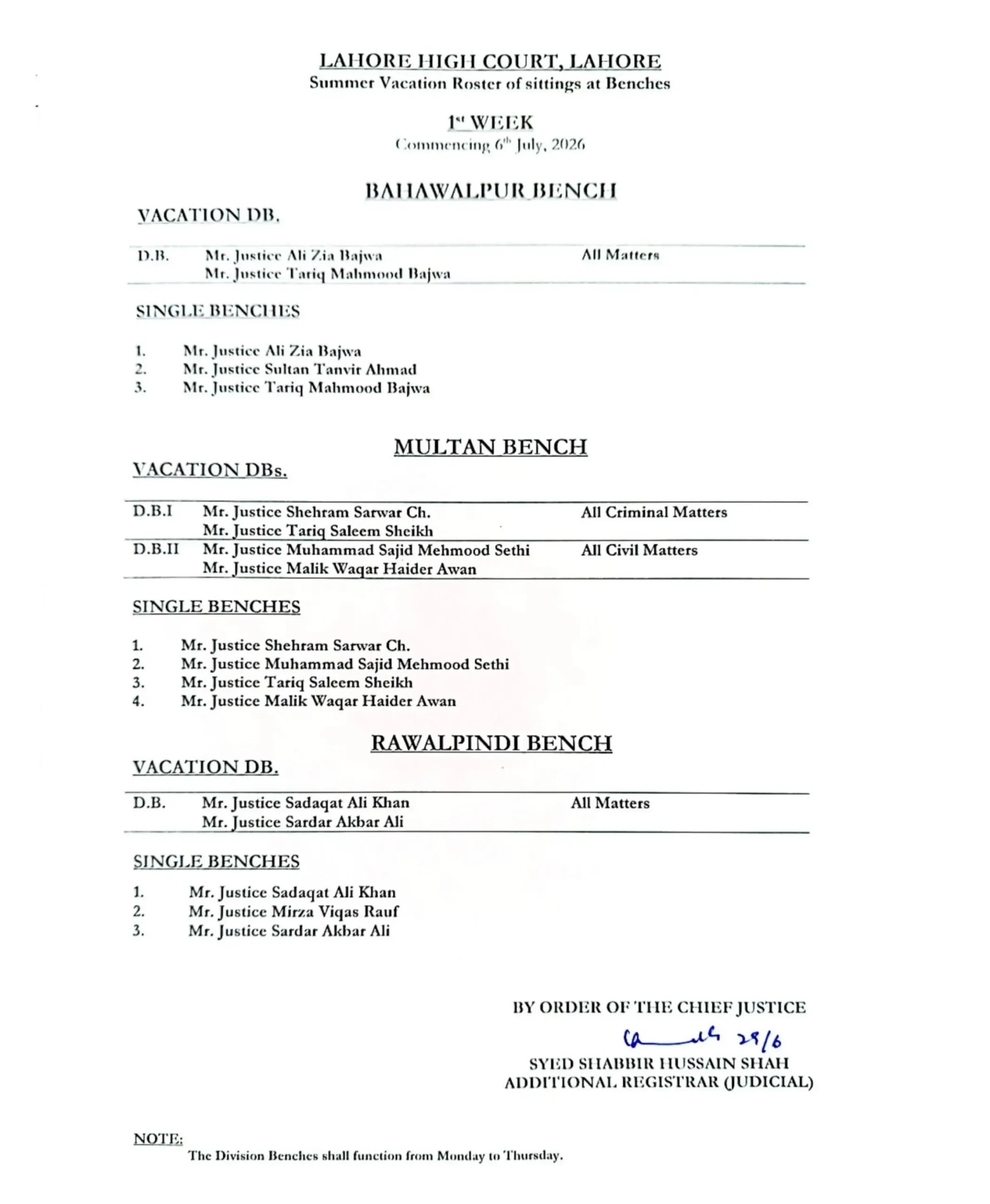
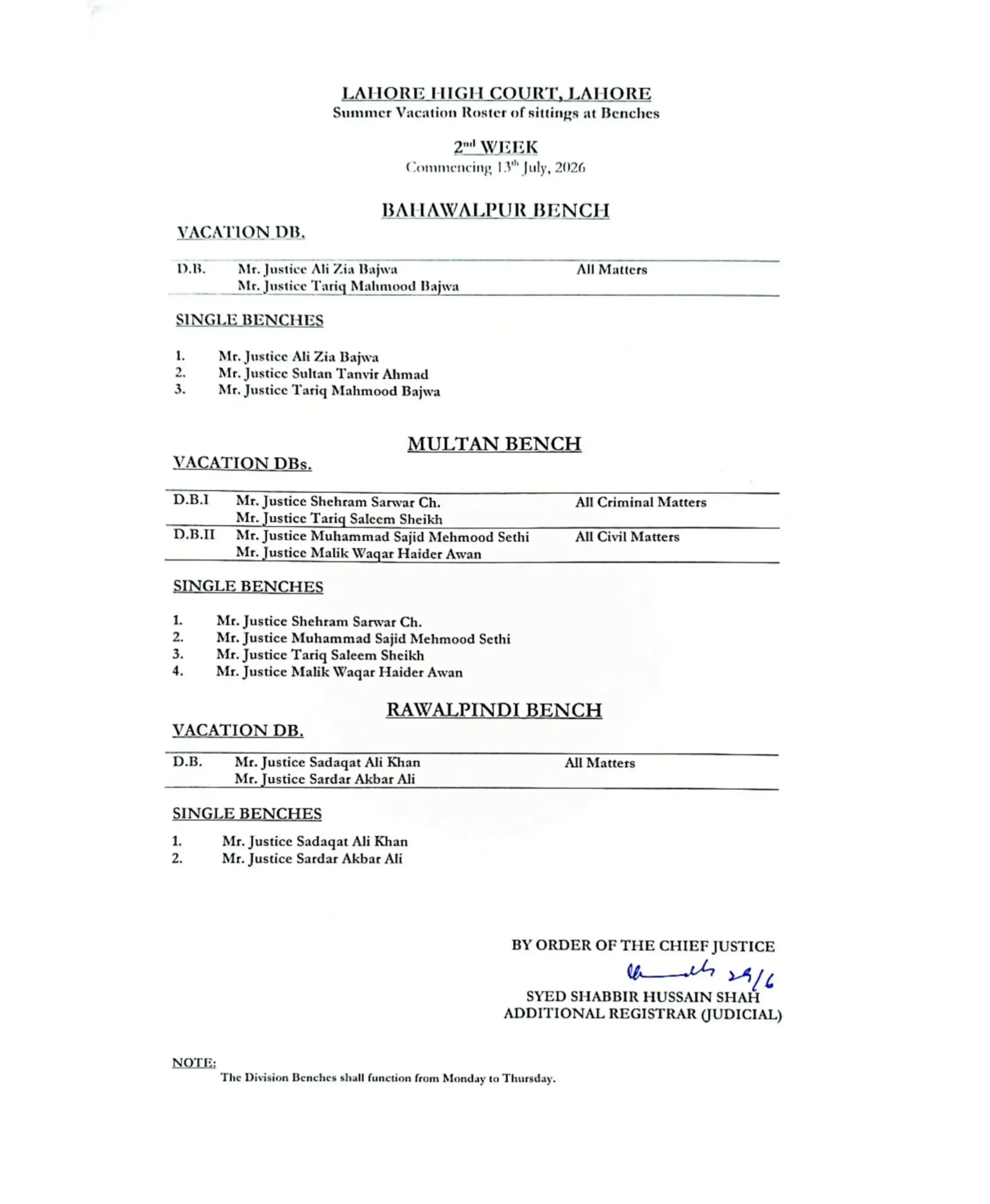
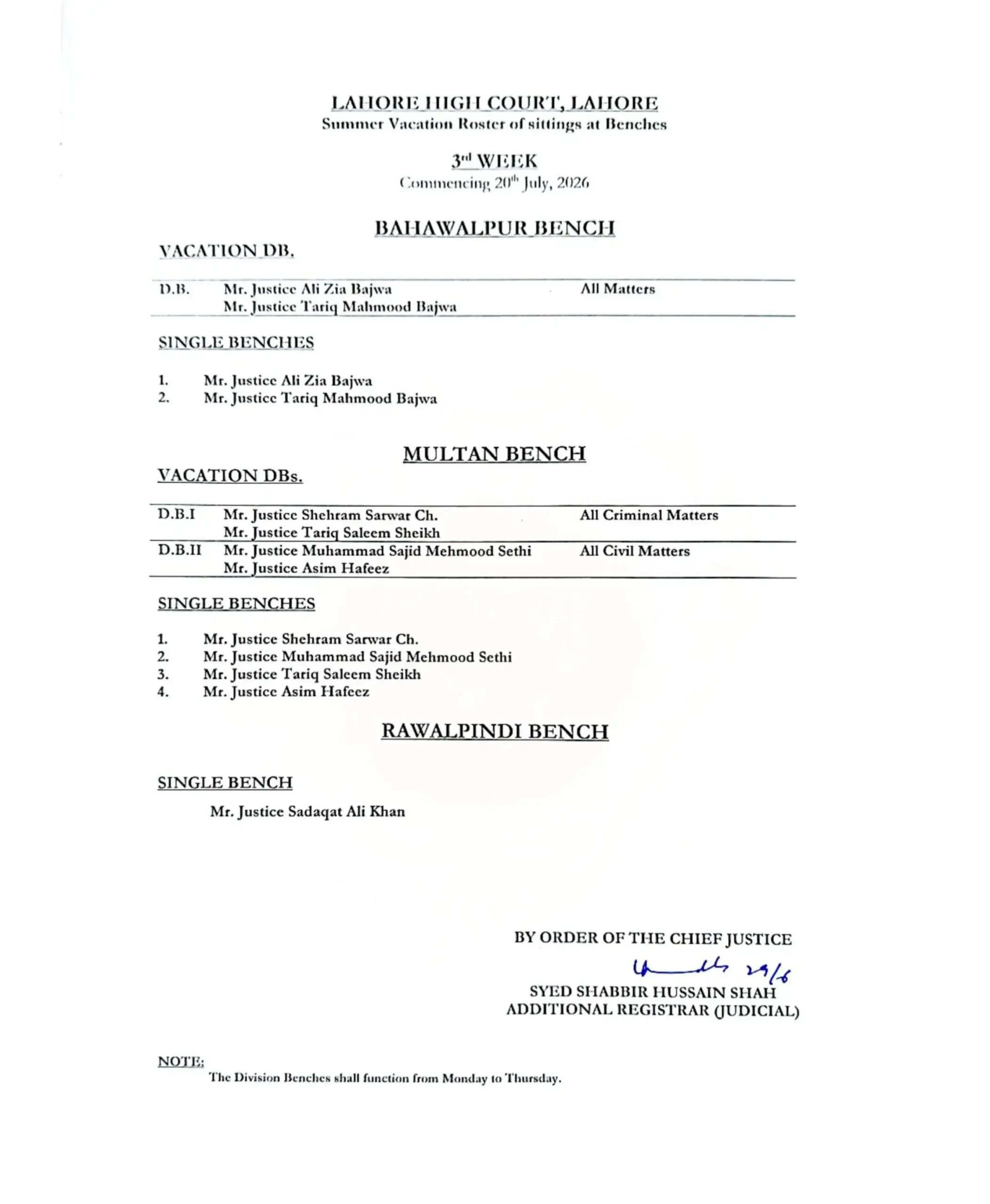
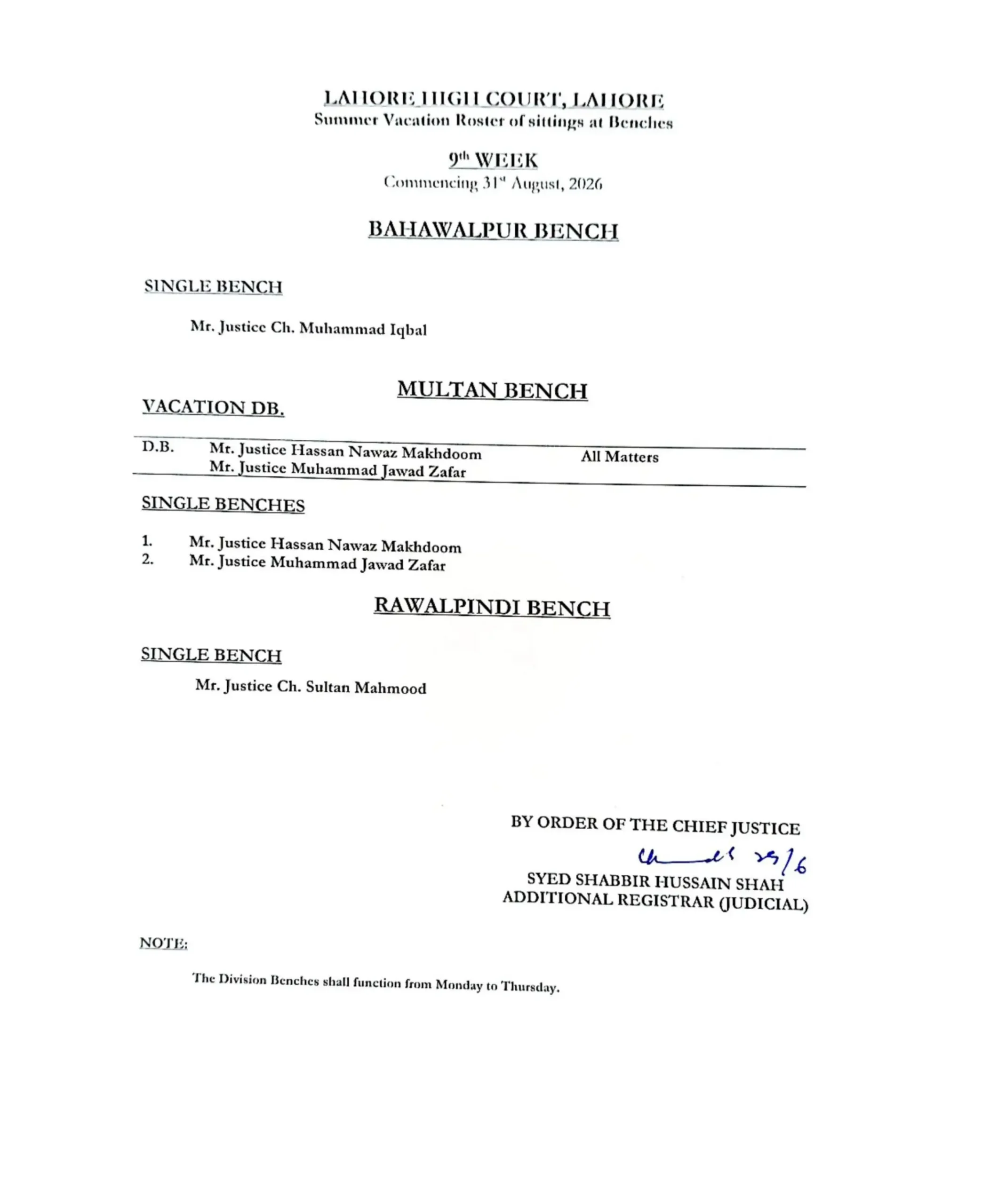
Lahore High Court Roster of Sittings — Complete Bench Schedules & Judicial Allocation
The Lahore High Court Roster of Sittings is one of the most important administrative structures of Pakistan’s judicial system, directly impacting the timely adjudication of civil, criminal, constitutional, and special matters across the province of Punjab. As the primary judicial authority in Punjab, the Lahore High Court periodically announces rosters that detail the sittings of various benches, including the Principal Seat at Lahore and its coordinated benches across Multan, Bahawalpur, and Rawalpindi.
In this we will explore the latest roster practices, explain how the court allocates cases, discuss the significance of judicial rosters for citizens and legal practitioners, and provide insight into related judicial rosters such as the High Court Multan Bench Roster, High Court Bahawalpur Bench Roster, and High Court Rawalpindi Bench Roster.
1. Understanding the Lahore High Court Roster of Sittings
A roster of sittings is essentially the official schedule that determines which judicial benches hear matters on specific dates, locations, and subject domains. The Lahore High Court, like other high courts in Pakistan, publishes these rosters to ensure transparency, predictability, and equitable judicial distribution.
The Lahore High Court Roster of Sittings serves several purposes:
Judicial Work Allocation: Assigns cases to different judges based on expertise and case type.
Bench Deployment: Determines where judges will sit — whether at the Principal Seat in Lahore or other benches.
Case Management: Helps lawyers and litigants understand when their cases may be taken up.
Coordination Among Benches: Ensures efficient management across various bench locations, including Multan, Bahawalpur, and Rawalpindi.
2. Structure of the Lahore High Court and Its Benches
2.1 Principal Seat — Lahore
The principal seat of the High Court is located in Lahore, serving as the core hub of judicial administration for Punjab province. Most constitutional, high-profile, and complex matters originate here. The Lahore High Court Roster of Sittings for the Principal Seat typically lists:
Full Court hearings (for matters of constitutional importance)
Division Benches (two or more judges)
Single-Judge Benches for specific categories
Special rosters for urgent matters
2.2 High Court Multan Bench
Located in southern Punjab, the High Court Multan Bench Roster governs sittings in districts such as Multan, Khanewal, Vehari, and Dera Ghazi Khan. It is essential for litigants in southern Punjab who would otherwise travel to Lahore for hearings. The Multan bench roster is structured to expedite justice regionally.
The High Court Multan Bench Roster typically includes:
Civil Appeals & Civil Revision matters
Criminal Appeals
Constitutional Petitions
Monthly schedules indicating judges and case blocks
2.3 High Court Bahawalpur Bench
Another key branch is the High Court Bahawalpur Bench, which manages cases from the desert belt districts, including Bahawalpur, Bahawalnagar, and Rahim Yar Khan. Its roster is carefully synchronized with the principal seat to ensure no duplication or overlap in hearing dates.
2.4 High Court Rawalpindi Bench
To serve northern regions of Punjab, the High Court Rawalpindi Bench Roster focuses on judicial matters in districts like Rawalpindi, Islamabad region (only in limited constitutional matters), Jhelum, and Attock. Known for handling public interest litigation and criminal matters with increasing workload, the Rawalpindi bench plays a strategic role in regional justice delivery.
3. Importance of the Roster of Sittings in Judicial Efficiency
The concept of a roster may appear administrative, but its implications are profound:
3.1 Predictability for Litigants and Lawyers
Knowing the Lahore High Court Roster of Sittings in advance allows lawyers to plan hearings, prepare arguments, and advise clients effectively. When combined with bench allocation details from benches like Multan, Bahawalpur, and Rawalpindi, this schedule becomes a tool for legal strategy.
3.2 Judicial Accountability
Rosters also maintain accountability — courts are expected to adhere to published schedules unless extraordinary circumstances force changes. This preserves judicial integrity and reinforces public trust.
3.3 Case Backlog Management
By designating different bench rosters, the Lahore High Court aims to distribute workload efficiently across geographic and subject matter lines, ensuring expedited hearing of cases.
4. How the Lahore High Court Roster Is Set
The Chief Justice of the Lahore High Court — in consultation with senior judges — finalizes the Roster of Sittings. It takes into account:
Case Inventory: The number and nature of pending matters.
Judicial Specialization: Certain judges may specialize in constitutional or criminal matters.
Geographic Access: Benches like Multan, Bahawalpur, and Rawalpindi require careful scheduling to conserve judicial time and resources.
Emerging Needs: Special rosters may be issued for urgent or high-impact cases.
5. Bench Types in the Roster
5.1 Full Court
Used for constitutional questions of high importance. Frequently covered under the Lahore High Court Roster of Sittings, these sessions may include all available judges presided over by the Chief Justice.
5.2 Division Bench
Typically comprises two or more judges. Division benches hear appeals, high volume matters, or litigations requiring diverse legal perspectives.
5.3 Single Bench
Assigned for routine or specialized matters where a single judge is sufficient, such as preliminary criminal bail hearings or simple civil applications.
6. Highlights of the High Court Multan Bench Roster
The High Court Multan Bench Roster is crucial for litigants in southern Punjab. It often features:
Monthly lists of cases for civil, criminal, and constitutional domains
Announcements about judicial leave and bench substitutions
Alerts on urgent matters
Regular updates to the High Court Multan Bench Roster ensure that even regional cases receive timely hearings, avoiding undue delays caused by centralized hearing systems.
7. Bahawalpur’s Role in the Judicial Ecosystem
Serving a large population, the High Court Bahawalpur Bench Roster is designed to reduce travel distances for litigants from the southernmost districts. The roster provides:
Quarterly hearing dates
Bench allocations for different legal categories
Coordination notes between Lahore and Bahawalpur to ensure smooth case transfer
8. Rawalpindi Bench — Strategic Jurisdictional Coverage
While the principal seat remains Lahore, the High Court Rawalpindi Bench Roster ensures northern districts have local access to justice. Some of the features include:
Scheduled sittings for civil and criminal appeals
Judicial notices tailored to Rawalpindi region caseload
A roster that syncs with Lahore to prevent scheduling conflicts
The Rawalpindi Bench often deals with high-burden public interest litigation and constitutional writ petitions due to its proximity to the federal capital.
9. Common FAQs about the Lahore High Court Roster of Sittings
Q1. Where can I view the latest Lahore High Court Roster?
The roster is usually published on the official Lahore High Court website, law publications, and legal news platforms. It is periodically updated for changes in bench assignments or holiday notices.
Q2. How often is the roster revised?
Rosters are typically revised monthly or as needed, reflecting judicial leaves, new case filings, or administrative changes.
Q3. Does the roster affect ongoing cases?
Yes. Once a roster is announced, cases are allocated to benchmarked dates and benches. Lawyers are advised to confirm roster postings before attending court.
Q4. What is the relationship between Lahore and its benches like Multan, Bahawalpur & Rawalpindi?
Each roster is aligned to ensure seamless judicial operations while serving different geographic zones in Punjab.
10. Best Practices for Litigants and Legal Practitioners
To make the most of the Lahore High Court Roster of Sittings and related bench rosters:
Check the roster regularly — last-minute changes happen.
Plan hearings according to bench assignments, especially when cases are transferred between benches.
Anticipate holidays or judicial recess which can affect roster timings.
Coordinate with court clerks for updates on your case’s timing and bench allocation.
11. Impact of Roster Transparency on Justice Delivery
The publication of roster schedules, including the High Court Multan Bench Roster, High Court Bahawalpur Bench Roster, and High Court Rawalpindi Bench Roster, has improved:
Access to justice by reducing uncertainty for litigants
Judicial transparency through open scheduling
Legal education as law firms and advocates rely on published rosters for case calendars
Transparency in rosters also facilitates research into judicial efficiency, backlog trends, and allocation fairness across jurisdictions.
12. Digital Tools & Roster Access
In recent years, the Lahore High Court has introduced:
Online roster downloads
Searchable case listings by bench
Email notifications for roster changes
Mobile updates through judiciary portals
These digital methodologies ensure that professionals and citizens alike are informed of the latest Lahore High Court Roster of Sittings, alongside bench schedules for Multan, Bahawalpur, and Rawalpindi.
13. Conclusion
The Lahore High Court Roster of Sittings remains a cornerstone of judicial administration in Pakistan’s largest province. It orchestrates how justice is delivered, how cases are heard, and how benches operate in tandem across geographical zones.
Whether you are preparing for a hearing at the Principal Seat in Lahore or reviewing your case schedule under the High Court Multan Bench Roster, High Court Bahawalpur Bench Roster, or High Court Rawalpindi Bench Roster, understanding the roster system empowers you to navigate the legal landscape effectively.
Staying updated with the roster ensures readiness, reduces procedural delays, and helps litigants and lawyers alike align their strategies to the judicial calendar. Transparency, predictability, and efficient distribution of judicial workload are the hallmarks of a well-managed roster system — which is why the Lahore High Court continues to prioritize its publication and accessibility with each judicial term.
Principal Seat